Fees

Renovation project manager cost in the UK — how fees actually work

Searching for renovation project manager cost in the UK usually turns up a single number that does not match the job in front of you. Here is how fees are really structured, what moves them, why who pays the manager matters as much as the figure, and how to compare two quotes without guessing.

The short answer

There is no single UK price for a renovation project manager, because project managers do not all sell the same thing. Four fee models are in common use, and the same project can be quoted under any of them — which is why two figures that look wildly different are often describing genuinely different amounts of work.

Before you compare numbers, ask a simpler question: who appointed them, and who pays them? A client-side manager answers to you. A builder’s project manager — or a design-and-build package that “includes PM” — answers inside the contractor’s commercial structure. That difference usually matters more than a few percent either way on the fee.

The ranges below are the ones published by third-party UK cost guides such as Checkatrade and Houzz. They are a picture of the market, not my rates — I quote against a described project, for the reasons set out further down.

The four ways project managers charge

Percentage of build cost

Commonly quoted at 10–20% of total project spend

Suits: Larger projects where the manager is involved from design through to completion.

Watch for: The fee rises as the project gets more expensive. That is a structural conflict of interest, and it is worth naming out loud before you sign.

Fixed fee for a defined stage

Cost guides put pre-construction packages in the region of £5,000–£7,000

Suits: A one-off piece of work with a clear end point — reviewing quotes, setting up a budget and a variation process, getting you to a signed contract.

Watch for: Check exactly where the stage ends, and what happens on the day after it ends.

Monthly retainer

Cost guides put ongoing site-stage support at roughly £1,000–£3,500 a month

Suits: Live projects where the value is regular site attendance and continuous coordination.

Watch for: Ask what a month actually buys — number of visits, response times, and what happens if the programme slips by three months.

Day rate or hourly

Cost guides quote roughly £100–£200 an hour

Suits: Occasional, targeted input — a second opinion, a difficult meeting, a specific problem.

Watch for: Cheap to start, hard to forecast. Agree a cap or a review point so it cannot quietly become the most expensive option.

Sources: Checkatrade’s house renovation project manager cost guide and Houzz UK’s project management fee article, both accessed August 2026. Market figures move — treat them as a sense of scale rather than a quotation.

The conflict of interest nobody mentions

It is worth pausing on the percentage model, because it is the most commonly quoted and the least examined. If a project manager charges a percentage of what you spend, their fee goes up when your project gets more expensive.

That is precisely backwards. You are hiring someone to challenge quotes, question allowances and stop costs drifting — and the fee structure quietly rewards the opposite outcome. Plenty of good, honest people charge this way and manage the tension perfectly well. But you should know it is there, and you are entitled to ask how they handle it.

The same question applies to anyone in the chain: does the person advising me earn more if I spend more? An architect on a percentage fee, a builder pricing their own variations, a supplier paying referral commission. Independence is not a marketing word — it is a description of who pays whom.

That is why I work client-side only: appointed by you, paid by you, with no commercial relationship to the builder. If you want the market fee picture first, keep reading. If you already have a quote and want a straight read on whether a manager is even worth it for your job, get in touch — or send the quote for a free review below.
What actually drives the number

The value and complexity of the build

A £60,000 loft conversion and a £600,000 whole-house renovation are not the same job scaled up. More trades, more interfaces and more money moving means more to manage.

How long it runs

Almost every fee model is really a proxy for time on site. A project that takes nine months costs more to manage than the same project done in five.

How much is already resolved

Drawings approved, structural calculations done, planning granted, party wall agreements served — a project arriving in that state needs less from me than one starting from a sketch and an idea.

How much you want to keep

Some clients want everything handled. Others want to run their own build and have someone check the quotes and turn up once a fortnight. Those are very different fees.

The condition of the property

A Victorian terrace that has already been altered twice by previous owners carries far more unknowns than a straightforward extension on a sound house.

When you bring someone in

Coming in before a builder is appointed is cheaper and considerably more useful than coming in to rescue a project that has already gone wrong.

What a project management fee does not include

This is where a lot of budgets go wrong. A project manager coordinates the team — they are not a substitute for the people in it. These sit outside the fee and need their own line in your budget:

  • ArchitectDesign, drawings and the planning application.
  • Structural engineerCalculations and structural drawings for steels, openings and foundations.
  • Party wall surveyorServing notices and preparing awards where the Party Wall etc. Act 1996 applies.
  • Building controlThe local authority or approved inspector fee for inspections and sign-off.
  • Quantity surveyorFormal cost planning and valuations on larger or contract-administered projects.
  • Planning feesThe council application fee and any pre-application advice.

Not sure which of these your project actually needs?Project manager, architect or main contractor: who do you actually need?goes through it, anddo you need a structural engineer?covers the one people most often leave out.

How to compare two project management quotes

Two fees are only comparable once you know what each one buys. These are the questions that surface the difference:

  1. Which fee model is it, and what is the total you would expect to invoice across the whole project?
  2. How many site visits does that include, and what happens if the programme runs long?
  3. What exactly is in the scope, and what is specifically excluded?
  4. Do you have any commercial relationship with the builder, the architect, or any supplier on this job?
  5. Do you take any commission, rebate or referral fee from anyone I will be paying?
  6. If you source materials at trade prices, does the discount come to me or to you?
  7. What happens to the fee if the project is paused, or if I cancel?
  8. Can I speak to two homeowners you have worked with in the last year?

There is a longer version of this in12 questions to ask before hiring a renovation project manager. The same discipline applies to builder quotes —how to compare builder quotescovers that side, and there is aprintable comparison checklistif you want to work through the line items on paper.

Does the fee pay for itself?

Sometimes. Not always, and anyone who tells you otherwise is selling something.

On a small, straightforward job with a builder you already know and trust, the maths is genuinely thin, and I will say so rather than take the work. On a six-figure renovation with several trades, structural work and decisions landing every week, the recovery routes are real and they compound:

  • Sourcing materials at trade prices, not retail
  • Identifying omissions before a builder is appointed
  • Questioning unclear or duplicated additional costs
  • Avoiding rushed purchasing and expensive substitutions
  • Preventing delays caused by late decisions
  • Sense-checking payment requests against progress

The mechanics are set out intrade prices vs retailandthe most common renovation budget overruns. For build costs rather than fees, seeextension and loft conversion costs in London in 2026.

Why I quote per project rather than publishing a price list

I used to publish tiers. I took them down, because they were not honest about how the work is actually scoped.

The problem is that "project management" describes a range of involvement so wide that any published figure misleads somebody. Two loft conversions of identical value can need three months apart in management, depending on whether the drawings are resolved, whether the builder is any good, and how many decisions are still open. Quoting a number before I know that is either guesswork or a hedge — and a hedge always costs the client who did not need it.

So the conversation comes first. Tell me what you are building, where you are in the process and what you would most like taken off your plate, and I will tell you what I think it needs and what that costs. If the answer is that you do not need me, I will say that instead.

Common questions

How much does a project manager cost for a house renovation in the UK?

There is no single figure, because project managers charge in four quite different ways: a percentage of the build cost, a fixed fee for a defined stage, a monthly retainer while work is on site, or a day rate. Published UK cost guides put percentage fees in the region of 10–20% of total spend, pre-construction packages around £5,000–£7,000, monthly site-stage retainers around £1,000–£3,500, and hourly rates around £100–£200. The right question is not which number is smallest but which model matches the amount of involvement your project actually needs.

Is a renovation project manager worth the money?

It depends almost entirely on the size of the project and the state it is in. On a small, simple job with a builder you already trust, the honest answer is often no. On a six-figure renovation with several trades, a structural element and decisions being made weekly, the fee has a realistic chance of paying for itself through quotation omissions caught before they become variations, materials bought at trade rather than retail prices, and delays avoided. If someone tells you it always pays for itself, they are selling.

Why do project managers not publish their prices?

Because the same words describe wildly different amounts of work. "Project management" on a loft conversion with approved drawings and an appointed builder might be a handful of visits; on a whole-house renovation starting from a sketch it can be most of a year. A published price list would either be so wide as to be meaningless or would quietly misprice most enquiries. It is more useful to describe the project and get a figure against it.

Does a percentage-based fee create a conflict of interest?

Structurally, yes. If the fee is a percentage of what you spend, the manager earns more when the project costs more — which is exactly the opposite of what you are hiring them to do. That does not make percentage fees dishonest, and plenty of good people charge that way, but it is worth naming and worth asking how they handle it.

When is the cheapest time to bring in a project manager?

Before a builder is appointed. At that point the scope, the quotes and the contract are all still changeable, and the work is mostly reading and questioning rather than firefighting. Coming in after work has started is always more expensive, because by then the mistakes have been built.

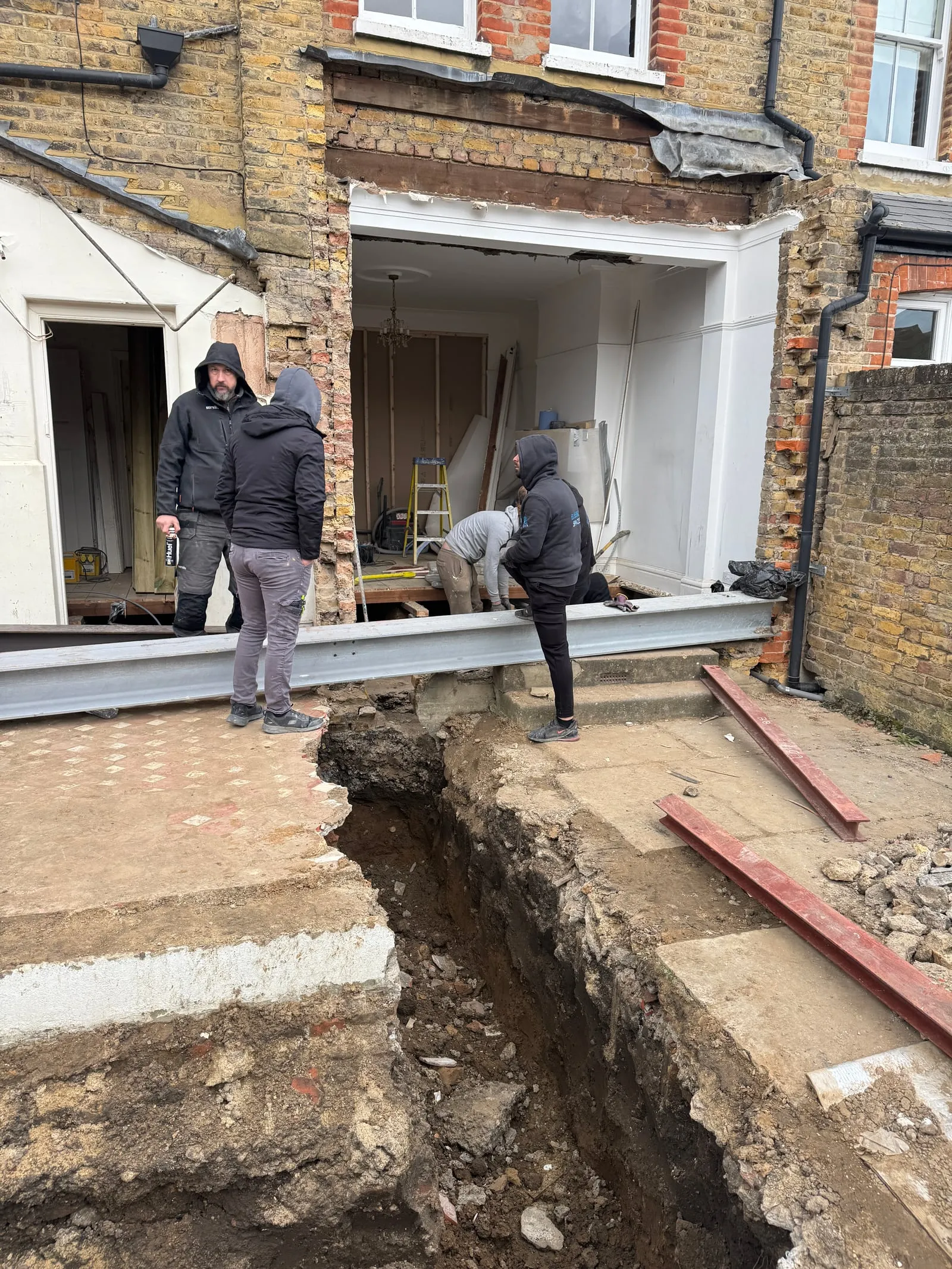
Excavation and structural steelwork at the start of a rear extension in South West London

Groundworks — the stage where budgets are most often lost, and the reason the cheapest time to involve someone is before a builder is appointed.

Next step

Tell me about the project and I will give you a figure.

No published price list, no obligation, and a straight answer about whether you need a client-side manager at all — or whether you are better running it yourself.

Get a project-specific fee