How Much Contingency for a UK Renovation or Extension?
 By Ben Murrell, independent project manager in South West London. Ask me a question →
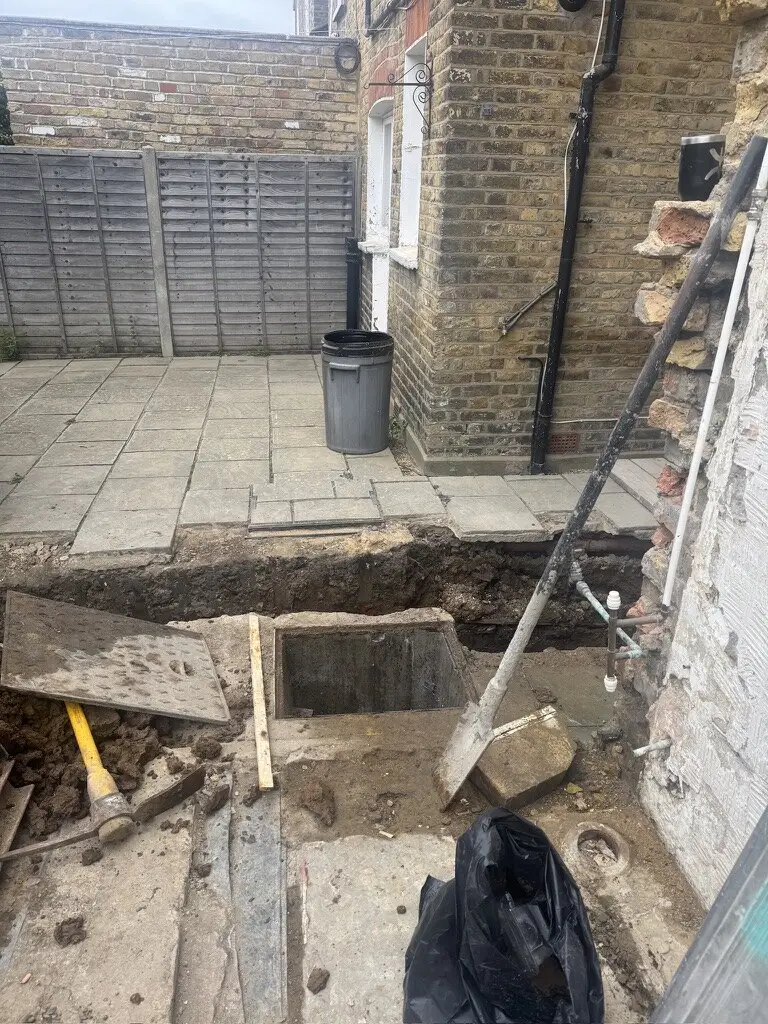
“How much contingency should I hold?” is the question people ask once the first builder total lands — or once a neighbour finishes a rear extension and quietly admits the final number was nothing like the tender.
Search results often answer with a tidy slogan: “always 10%” or “always 15%.” That is marketing-friendly. It is not how risk works on a Victorian terrace in Wandsworth or a period renovation in Fulham.
Here is the blunt version: contingency is a client-held buffer against the works subtotal. It is not the builder’s gift, not leftover provisional sums, and not a substitute for complete drawings. Industry guides and experienced builders often discuss bands; those bands are context, not a Homeowners Project Manager guarantee. Your figure should track your unknowns — incomplete information, live-in constraints, prior alterations, and how aggressive the tender allowances look.
This article is education first. It is written for homeowners planning an extension, loft conversion or renovation who want a working rule before they lock a mortgage top-up — and who keep mixing contingency with provisional sums (PS) and prime-cost (PC) allowances inside the builder’s quote.
Homeowners Project Manager is a client-side renovation project manager for SW / West / Central London homeowners. We do not sell SaaS, we do not invent a universal “correct” percentage, and we do not pretend contingency replaces good tendering. If a conversation mainly helps you hold a clearer buffer and force like-for-like quotes, that is a valid outcome.
What contingency actually is (and what it is not)
Contingency is money you hold — or at least keep visible — against things that are not yet known or not yet decided. It sits next to the works budget, not inside a vague line the builder can spend without you noticing.
It is not:
- A provisional sum (a priced placeholder inside the tender for incomplete scope)
- A PC / prime-cost sum (usually an allowance for a supply item before final selection)
- An architect fee, structural engineer fee, or party wall award
- “Whatever is left over at the end if we are lucky”
If your tender is stuffed with PS lines and you also hold zero client contingency, you do not have two safety nets. You have one opaque risk pile and no client buffer.
For the overrun patterns that eat buffers (late decisions, scope creep, undiscovered conditions, retail materials, payments ahead of progress), see common renovation budget overruns. This pillar is about sizing and owning the buffer; that post is about what burns it.
Typical industry ranges — context only, not a HOPM tariff
UK homeowners, builders and third-party guides often talk in percentage bands of works (construction cost), not of the whole soft-cost stack. Figures move with market conditions, house type and information quality. Treat every percentage below as industry context discussed in 2026 conversations — verify with your quantity surveyor (if appointed), your architect’s cost advice, and your actual tenders. Homeowners Project Manager is not quoting your job and is not guaranteeing these bands.
| Rough shape of job (illustrative) | Band often discussed as context | Why the band moves |
|---|---|---|
| Simple single-storey rear / side return, complete drawings, empty house, few unknowns | Lower end of common discussion (sometimes cited around 5–10% of works) | Fewer hidden interfaces; still not zero risk |
| Typical period terrace extension / loft on SW London streets, some live-in or access pain | Mid band often cited around 10–15% of works | Prior alterations, party walls, drainage, steels, neighbour constraints |
| Full-house renovation, basement, listed / conservation friction, incomplete surveys, or heavy PS in tender | Higher end often discussed (15%+, sometimes more) | Unknowns compound; buffer must match information gaps |
Hard rule for this site: there is no “always 10%” answer. A clean new-build garage conversion and a Victorian terrace with three previous DIY alterations are not the same risk class. If a blog, calculator or forum thread presents one percentage as law, treat it as someone else’s slogan.
What to do instead of hunting for the “correct” number on the internet:
- Put a works subtotal in a planner (indicative bands, not a quote).
- Apply a client-visible contingency % against works — separate from fees.
- Stress-test: what happens if steels, drainage or making-good move?
- Revisit the % when drawings, surveys and tenders improve — contingency can fall when unknowns fall.
Try the extension / loft budget planner to turn a percentage into a pounds row you can see. For London works context (indicative), see house extension & loft conversion costs, London 2026.
When to raise contingency
Raise the buffer when risk is still sitting in the information, not only in the brickwork:
- Incomplete drawings or open options — kitchens, glazing, steels and drainage still “TBC”
- Period fabric with limited opening-up — plaster, floors and prior alterations not surveyed
- Live-in programme — temporary works, dust boundaries and decision lag cost money
- Heavy provisional-sum loading in tenders — see sibling guide on provisional sums & PC sums
- Multi-consultant interfaces — architect + SE + party wall + drainage + specialist glazing
- Access / neighbour friction typical of tight Wandsworth and Fulham streets (scaffold, parking, party wall timing)
- Aggressive headline tenders that look cheap until exclusions are lined up — use how to compare builder quotes
Raising contingency is not pessimism. It is admitting what you do not yet know.
When you can responsibly lower contingency
Lowering is earned, not hoped:
- Measured survey and opening-up have happened
- Technical information is issued; steels and drainage are designed, not guessed
- Tenders match on scope, exclusions and PS/PC rows (like-for-like)
- You are empty-house or have a realistic decision schedule
- Client direct purchases (kitchen, sanitaryware) are priced and locked
- Remaining risk is mostly programme slip, not discovery
Even then, do not drop to zero on a period London house. Discovery risk rarely goes to nil; it shrinks.
Contingency vs provisional sums vs PC sums (one paragraph you can keep)
Contingency is your buffer outside (or clearly ring-fenced from) the builder’s spend authority. Provisional sums are priced placeholders inside the tender where scope is incomplete — risk until firm. PC / prime-cost sums are usually supply allowances before final product choice — still check labour, overhead and margin around them. Do not assume “leftover PS” equals contingency. Do not hide client contingency inside a vague builder allowance you cannot see. Full plain-English treatment: provisional sums & PC sums in builder quotes. For the short bullet version already on the quote post, start at compare builder quotes.
Contingency vs professional fees
Architect fees, structural engineer fees, party wall and building control sit in the soft-cost stack. They are not contingency. A higher design fee that produces better technical information can reduce the contingency you need — but only if the appointment actually buys that information. For how architect fees are structured (drawings-only vs full service / CA, no compulsory fee scale), see architect fees UK & London. For how client-side PM fees sit separately, see renovation project manager cost.
Checklist line worth writing down: works + fees + client contingency — three buckets, not one lump.
How to hold contingency so it actually works
- Name it on your planner as a client line, not “misc.”
- Base it on works, then decide whether VAT and client purchases sit inside or outside that base — be consistent across quotes.
- Release deliberately — variation agreed in writing, not WhatsApp hope.
- Do not double-count PS overruns as “already covered by contingency” without updating the tracker.
- Re-forecast monthly (or at each valuation) so the remaining buffer matches remaining risk.
- Keep a decision log — late finishes choices burn contingency as fast as rotten joists.
On SW / West / Central London jobs, the households that stay calm are usually the ones who can answer “how much buffer is left?” without opening six email threads.
Soft bridge to client-side quote and budget review (no bait-and-switch)
You do not need a project manager to hold contingency. Many homeowners do it well with a planner and discipline.
A client-side seat starts to earn its keep when:
- Three tenders still disagree after clarifications
- PS/PC lines are doing heavy lifting and nobody owns conversion to firm prices
- You are living in and dual-income time-poor
- Mid-build, the buffer is shrinking without a clear cause list
That is commercial and logistical protection on your side of the table — not a replacement for your architect, and not a pitch to skip design. If you mainly need clearer drawings, a stronger contract administrator appointment, or a better tender process, that is a valid outcome of a conversation.
Practical checklist before you lock the budget
- Write a works subtotal you believe (planner + real tenders).
- Choose a contingency % that matches current unknowns — not a forum slogan.
- Separate fees from contingency.
- Line up PS/PC across quotes before you trust any headline total.
- Decide who can release contingency (you; CA under contract rules; client-side PM if appointed).
- Revisit the % when information improves.
- If the unknowns cluster around money and programme rather than design beauty, get a client-side read on the quotes.
Soft close — enquire / phone
If you are in SW, West or Central London with drawings or builder quotes in hand and you want a straight read on contingency, exclusions and whether your buffer matches the risk still sitting in the tender — enquire or phone. There is no fee for the first conversation. If you mainly need a clearer architect package, a better like-for-like tender, or a different builder, that is a valid outcome. This is not a pitch to skip your design team.
Start from a sourced base: contingency sits on top of the build and the fees — get the build range from the extension cost calculator or loft conversion cost calculator and the fees from the renovation fees calculator.